

Welcome to Annabessacook Lake!
The Annabessacook Lake Improvement Association (ALIA) was formed in 1949 by concerned lake residents. ALIA has helped lead the way to making this beautiful lake a wonderful place to live and to visit. Over the decades, ALIA has worked to encourage good stewardship of the lake and promote harmonious use of this precious natural resource.
We ask that you join us in caring for the lake by following these guidelines:
Show respect to other lake visitors and residents (both human and animal) by adhering to common sense guidelines regarding safety and courtesy
Take care to protect native plants and wildlife
Reduce noise and environmental pollution
All lake residents and seasonal visitors are encouraged to become ALIA members. Your annual dues of $30 support ongoing efforts to maintain the health and beauty of the lake.
For more information, check our Facebook page:
https://www.facebook.com/AnnabessacookLake (Our username is @AnnabessacookLake)
You can also send an email to:
Enjoying the Lake Responsibly
People enjoy the lake in many ways: boating, paddling, fishing, and swimming. Please always show courtesy to others, however you choose to have fun. Here are some good practices to follow:
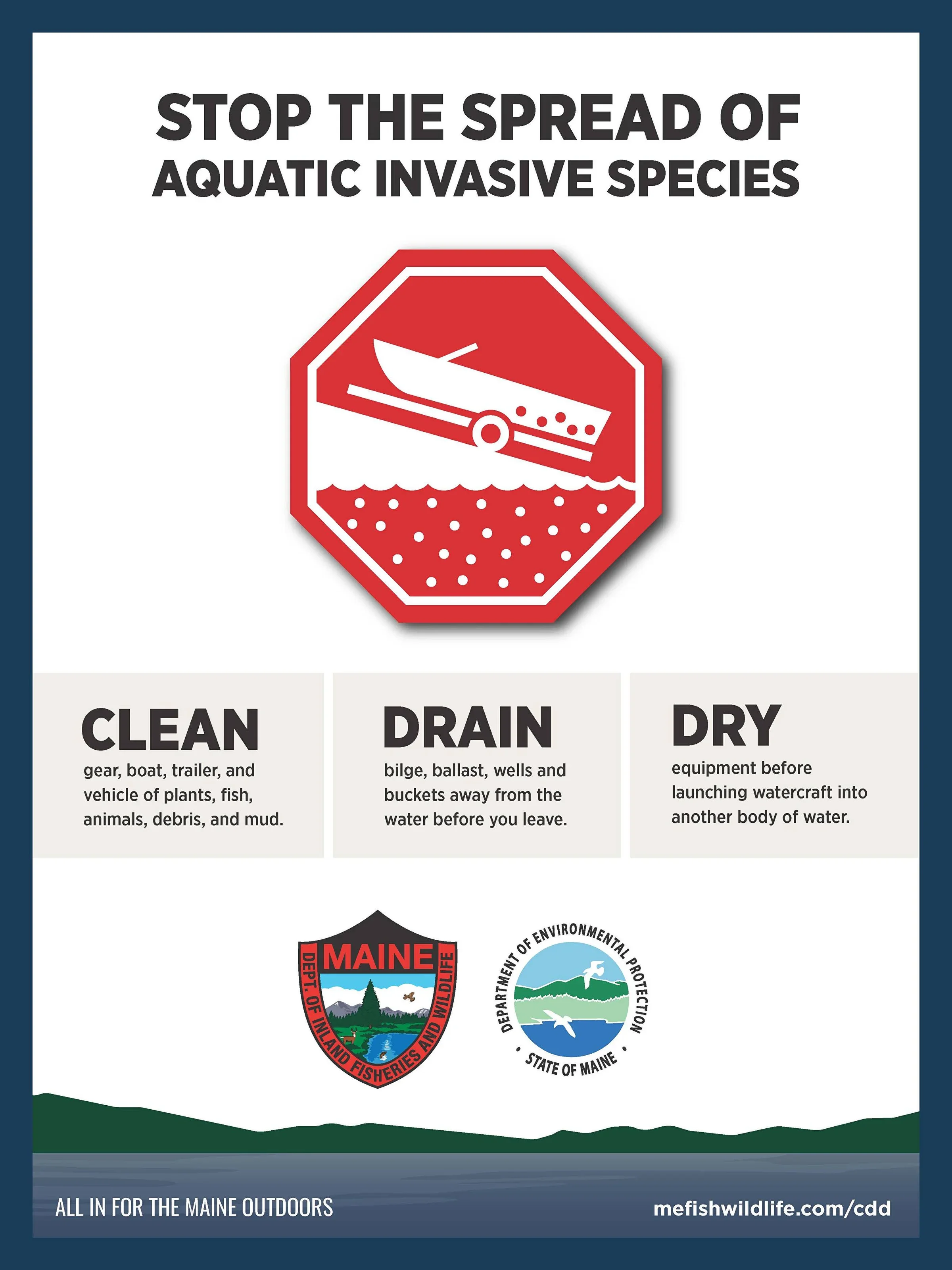
Prior to entering a water body and when preparing to leave launch sites, boaters are required to remove or open any devices designed for routine removal/opening (for example, hull drain plugs, bailers, live wells, ballast tanks) to encourage draining of areas containing water (excluding live bait containers). This must be done in a way that does not allow drained water to enter any inland water of the state.
Steer clear of loons and other wildlife. Enjoy watching them, but at a distance; help keep them safe and protected.
Stay away from the shoreline. Remember that the law requires you to operate at "headway speed" within 200 feet of any shoreline, including islands, and within a marina or an approved anchorage in coastal or inland waters. "Headway speed" means the slowest speed at which it is still possible to maintain steering and control of the watercraft.
Do not litter. Carry in, carry out.
Check the weather before you go out on the lake. Winds and temperatures can change quickly, with little warning.
Avoid areas with heavy plant growth. Traveling through, anchoring, or fishing in areas where there are water plants can damage them, which can cause fragmentation, increased risk of erosion, and destruction of fish and other wildlife feeding areas.
Take care to avoid spills when filling fuel tanks on or near the water. To reduce the chance of pollution, fill your gas tanks on shore if at all possible.
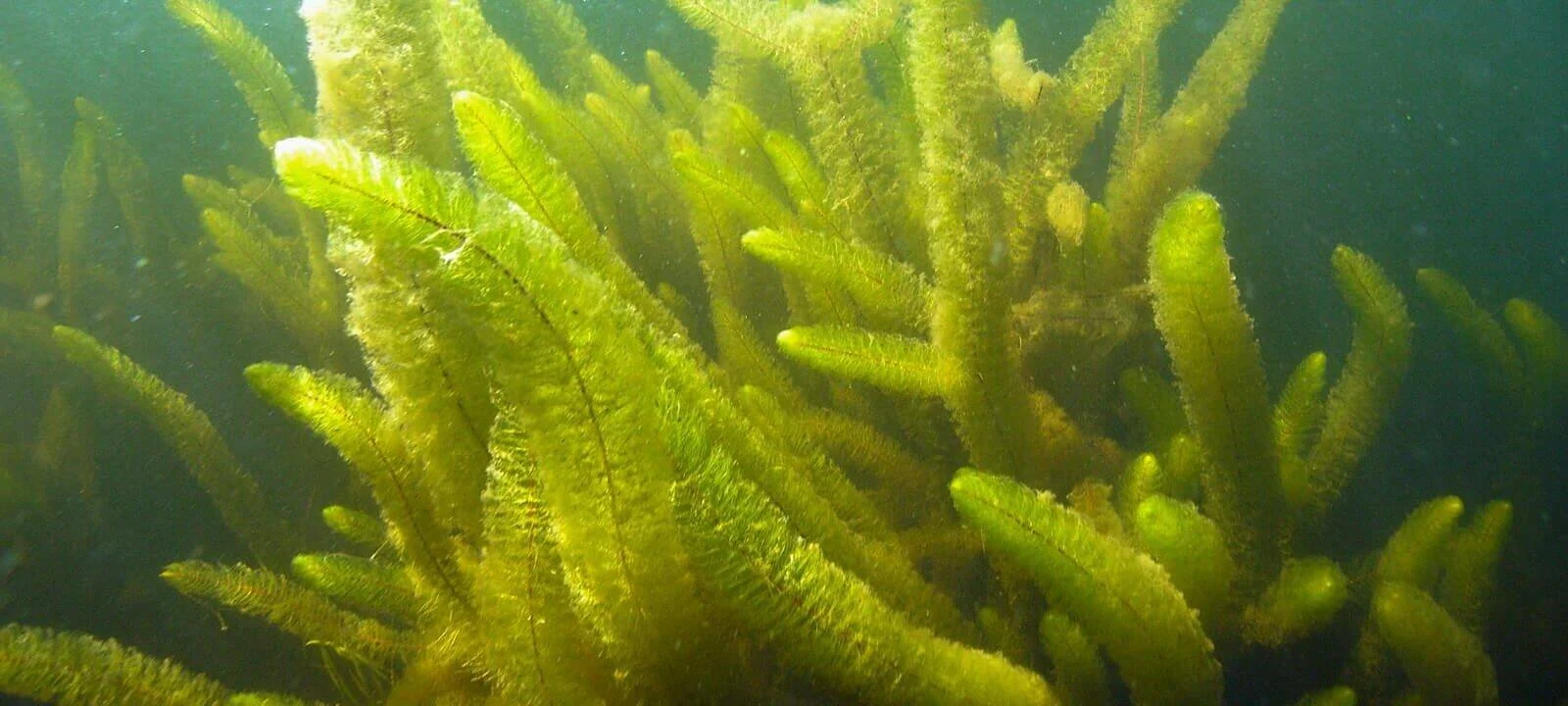
Variable leaf milfoil
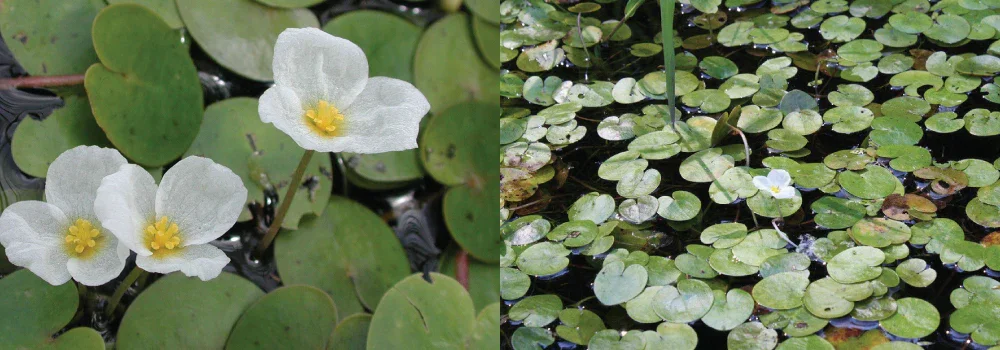
European frog-bit
Dealing with Invasive Plants
Variable leaf milfoil, an invasive plant, was first discovered in Annabessacook Lake in 2013. In the years since, dozens of volunteers, thousands of hours, and hundreds of thousands of dollars have been spent in an effort to mitigate its spread.
In 2020 and again in 2025, the application of an approved herbicide was a significant step in reducing the plant’s footprint. However, we must remain diligent to keep further spread at a manageable level, and everyone who makes use of the lake can play an important role in that effort through the following steps:
Keep clear of lake plants. Invasive plants can spread through fragmentation by boating and fishing activities.
Don’t throw plant fragments back in the lake. If you pull or find a fragment of any plant, dispose of it on shore away from the lake.
Inspect watercraft and trailers upon entering and leaving the lake – especially if you have visited another body of water. Even the smallest fragments introduced from another waterway can cause an infestation. And, in Maine -- it's the law!
Also, in 2025 we discovered a second invasive plant: European Frog-bit. At present, this can be removed only through manual (pulling) effort, by those trained in its removal.
If you have a question about a plant fragment that you’ve found and think it might be invasive, you can:
See It: Make note of its location so it can be found again.
Snap It: Take a photo of the suspicious plant. Do not touch or pull it out of the water. Any small fragments that break off could spread and re-root.
Send It: Email your photo and the location to ais@watershedfriends.org so Watershed Friends can identify the plant and determine if it needs prompt removal.
State of Maine Boating Safety Rules
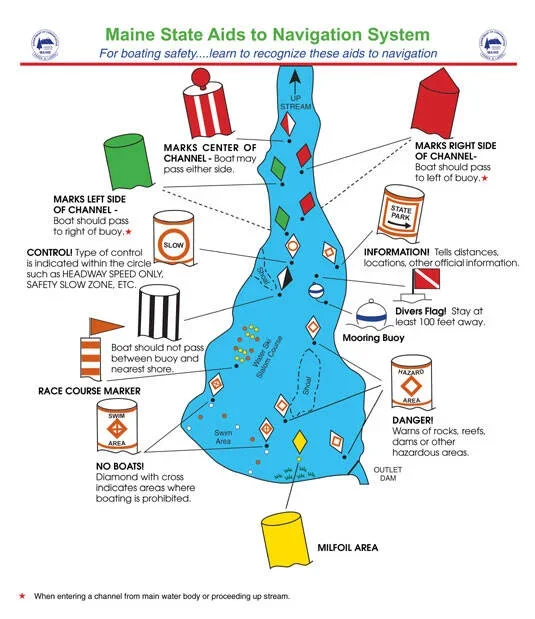
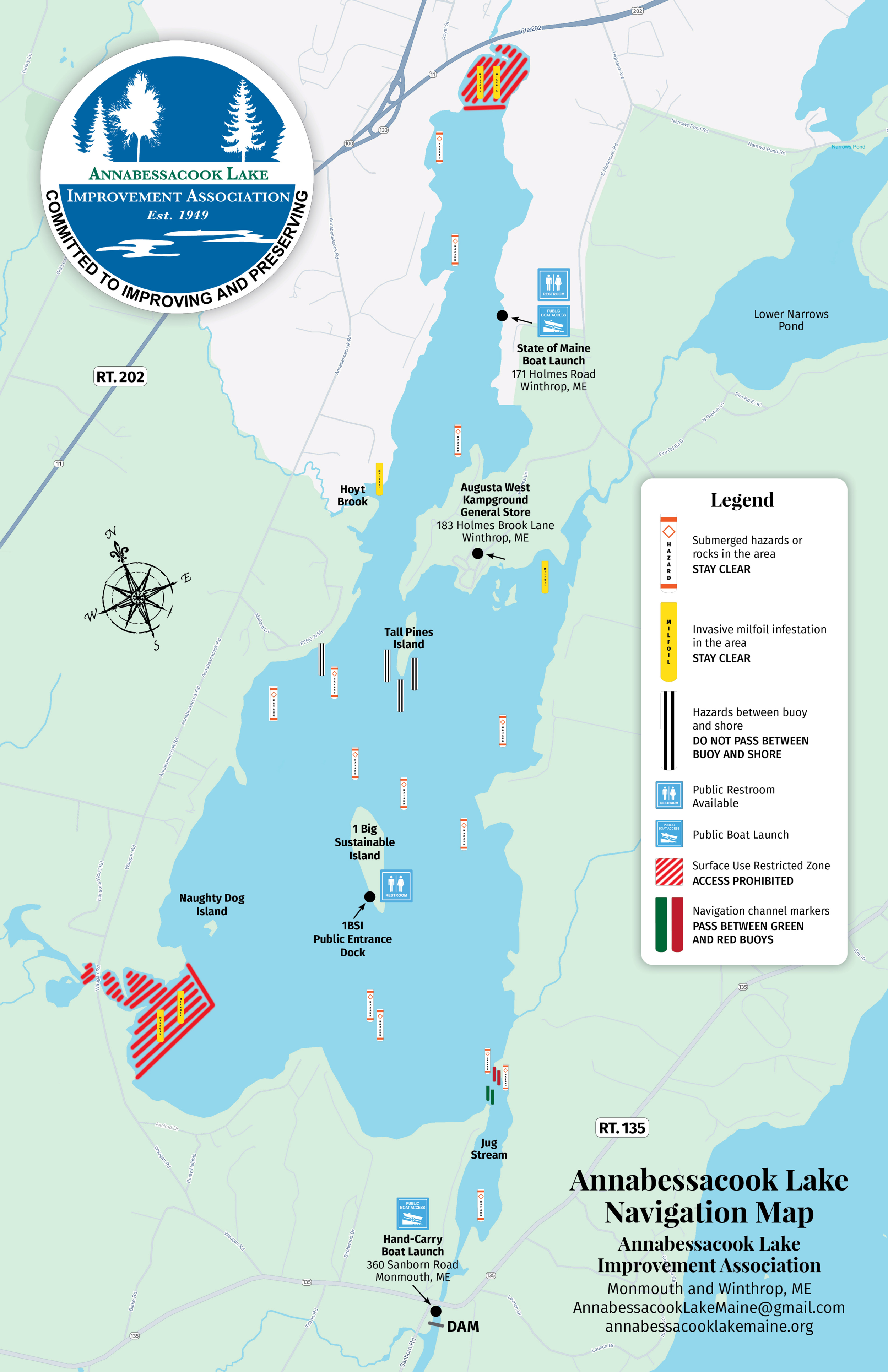
You will see navigational aid markers in the lake, in accordance with the Maine State Aids to Navigation System Rules & Regulations. This graphic illustrates the types of buoys you may see and their meanings:
IMPORTANT NOTICE: Not all hazards may be marked; boaters should use caution.
SURFACE USE RESTRICTION is in effect in two parts of the lake, as marked in the map at the top of this page. White buoys displaying a diamond with cross create a boundary to indicate where boating of any kind is prohibited.
For more information on navigational aids and regulatory markers, go to this site: https://www.maine.gov/dacf/parks/water_activities/boating/navigational_aids.shtml#System
For more information on Maine’s boating laws and regulations, go to this site: https://www.maine.gov/ifw/docs/maine-boating-laws.pdf
If you see anyone breaking any of the boating safety rules, please call the Maine Department of Inland Fisheries & Wildlife (Game Warden Dispatch) at 207-624-7076 , Ext. 9.